THE CAEN CANAL

Since ancient times, a road has linked Pont-Audemer to Bayeux through the present-day town of Bénouville. This route crossed the river Orne via a ferry, a flat-bottomed boat.
From the 11th century, the port of Caen appears in the chronicles. From the Middle Ages onwards, this port was a dynamic port, already in contact with England. The Westminster Abbey, built in London in the 13th century, is an illustration of this: it was mostly built from stones originating from the town of Caen.
In 1811, Emperor Napoleon I, after a short stay in Caen, ordered the immediate study of a straightening of the Orne, pending the construction of a canal between Caen and the sea.
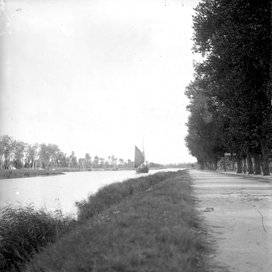
The 14 km canal linking Caen to Ouistreham was inaugurated on 1 July 1857.
At Bénouville, this canal was equipped with a swing bridge, permitted road traffic between the two banks and maritime navigation.
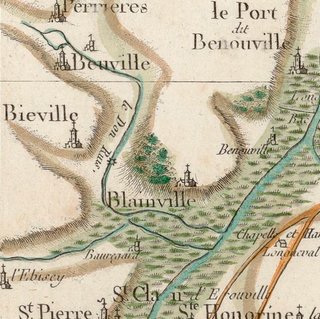
Le Bac, known as the Port of Benouville on the coloured Cassini map, 18th century © BNF

Development plans of the canal between Caen and the sea, between 1825 and 1928 © Archives du Calvados, S/13468
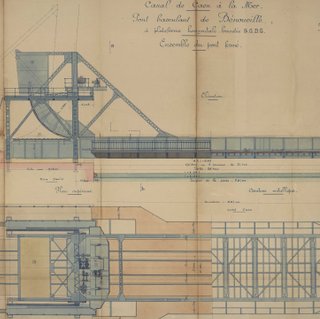
Octobre 1930 : colour plan of the new bridge designed by the Daydé Company © Archives du Calvados, 3S/43

© 2025 | Transmissus